





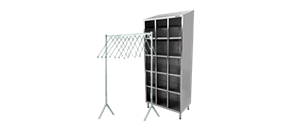


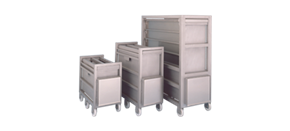


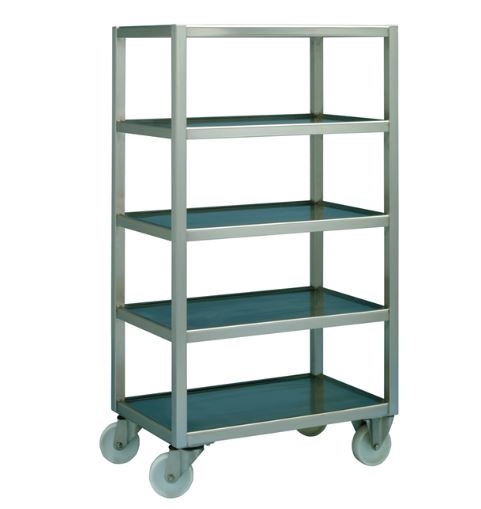
Storage shelf units are essential for organising warehouses and industrial spaces efficiently. Their robust and durable construction provides vertical storage tailored to cargo type, load capacity, and space availability. It is capable of supporting heavy goods in harsh industrial environments. Depending on operational needs, the design can range from simple to highly complex. It is often modular and scalable to adapt to changing storage requirements.
The structure is made from durable materials, helping distribute weight more efficiently. Industrial storage shelves are an integral part of multiple industries, including manufacturing, medicine, pharmaceutical, logistics, automotive, and many more. They store cargo methodically while complying with hygiene standards.
When selecting the correct unit for a specific facility and implementing an automated storage system, it is crucial to consider cargo requirements, shelf size, and configuration. Accessibility, environment, mobility, maintenance, as well as safety and regulations are all of critical importance.

Engineering principles and the science behind the storage shelf units
Industrial storage shelves may not always stand out, but their layout is meticulously planned for maximum efficiency. When positioned correctly, these units can prevent bottlenecks, accelerate workflows, and lower labour costs. They influence how personnel move through a space, enhance throughput, improve inventory accuracy, and ensure workplace safety.
Engineering principles determine how shelving, racking, and automated storage systems fit into the layout. These systems can be static or dynamic, and which one is perfect for your business has a lot to do with throughput requirements. Aisle width also has a significant role in layout efficiency. Too much space is not optimal, but if it is too narrow, the picking equipment cannot manoeuvre effectively.
It is essential that shelving supports an efficient, time-saving workflow as personnel move through the space to retrieve items. In many industrial settings, vertical space is often underutilized. Storage shelf units help eliminate inefficiencies and increase storage density while maintaining accessibility. Additionally, all equipment must comply with strict regulations, industry standards, and safety requirements.
Automated storage system for precise and speedy warehouse operations
Storage shelf units offer an effective way to transform warehouse operations and streamline how goods are stored, retrieved, and managed. As consumer demands evolve, businesses must modernize traditional storage methods to remain competitive. Warehouses today face increasing pressure to move goods faster, more efficiently, at lower costs, and with reduced labor.
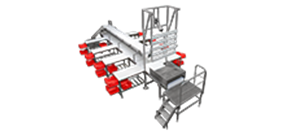
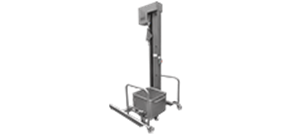
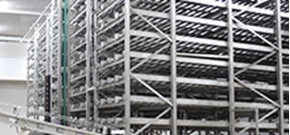
To stay competitive, they can implement an automated warehouse system that delivers speed, scalability, flexibility, accuracy, and optimal safety. The computer-managed system handles goods with minimal manual intervention. It includes (but is not limited to) shelves, racks, cranes, conveyors, bins, containers, and specialized software.
The automated storage system relies on a mix of software and hardware. It offers numerous advantages, including space optimisation, increased throughput, improved accuracy, better inventory control, and a safe work environment.

Planning storage for productivity with industrial storage shelves and automation
Storage shelf units are essential components of warehouse systems, streamlining operations and enabling quick, efficient storage and retrieval. Shelves can hold containers, crates, cartons, boxes, and other types of cargo while supporting accurate inventory management and ensuring safety. At NIEROS®, we are well aware that each facility has diverse needs, which is why our comprehensive solutions are customised to fit each facility and type of cargo.
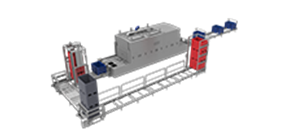
Most warehouses operate on the FIFO (first-in, first-out) principle, guaranteeing the products' best quality. Automated storage systems have an ergonomic and user-friendly design. Facilities can choose between empty-crate, full-crate, or pallet-based warehouse systems. The latter can also be gravitational, pick-and-place, or fully automated. Machines provide time-cost optimisation, effective traceability, and maximise space utilisation, ensuring economical storage management and allowing for flexible configuration.
Each system thrives in a different environment. An empty crate warehouse system is ideal for facilities with substantial storage capacity that must comply with the most rigorous HACCP, NSF, and IFS standards. Gravity-based systems are well-suited for small buildings with limited space, while pick-and-place and fully automated warehouses perform best in environments that handle heavy-duty loads.

Transforming warehouse space using industrial storage shelves
Industrial storage shelves are engineered to support automation, advanced technology, and sustainability. Innovative technology has completely transformed how warehouses and industrial facilities operate. Selecting the right shelving depends on factors such as layout, inventory, and the operating environment. A careful, strategic approach pays off in the long term—especially when scalability is a priority.
Racking, shelving, and any other equipment must comply with strict standards. Automation is critical in new warehouses, as it provides valuable data and prevents bottlenecks. Storage shelf units with automated systems are used in various industries. They include e-commerce, retail, food, beverage, manufacturing, automotive, and the pharmaceutical industry. As leading manufacturers with a long tradition, we at Nieros guarantee our products are available in a broad range of capacities, dimensions and storage requirements. We provide our partners with solutions that perfectly fit their needs, no matter what challenges they face.