




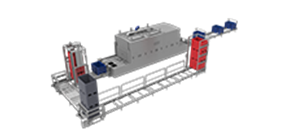
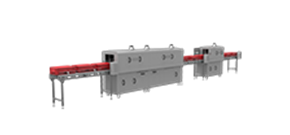
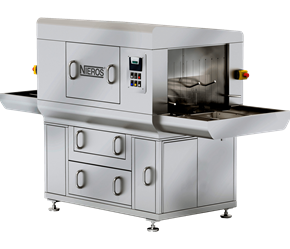

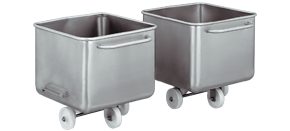

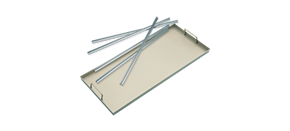

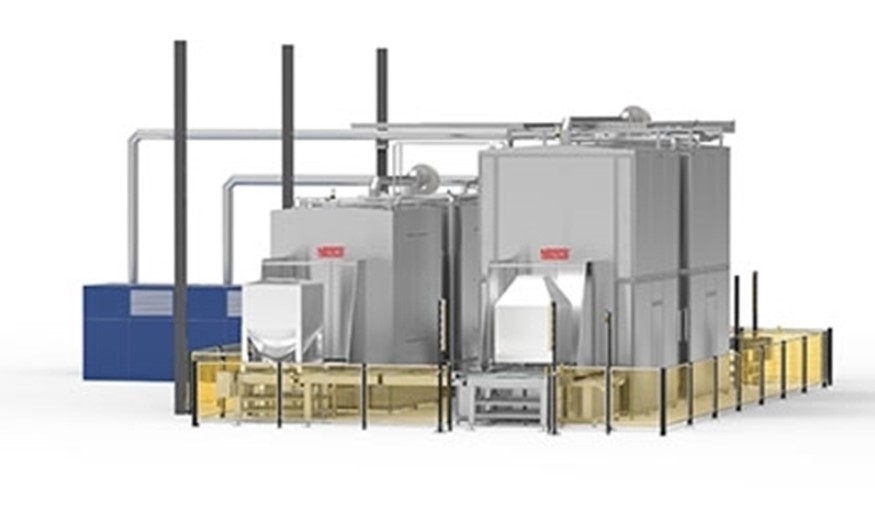
A tunnel dryer is a specialized machine that is indispensable in the chemical, fruit and vegetable, fish and seafood, meat, bakery, and other industries. At NIEROS®, we design our solutions so our clients can optimize drying time and production capacity. These two elements are influenced by the properties of the drying equipment, including its design, airflow, temperature and humidity control, loading conditions, and operational settings.
Understanding these factors allows us to enhance productivity, decrease energy consumption, and achieve stable production results. We also use airflow mapping to create a balanced, predictable, and efficient environment throughout the entire chamber. Our engineers design high-quality tunnel drying solutions that improve energy efficiency, reduce operating costs, and ensure uniform conditions.

Factors That Influence Drying Time and Production Capacity in Drying Equipment
A tunnel dryer is widely used in industries that require reliable water removal and high production output. Its performance depends on drying time and production capacity. Drying time determines how long products must remain inside the machine, while production capacity establishes how many items the system can process within a specific period. Several factors influence these parameters, including product properties and airflow. Every material has a different structure, moisture content, and thickness. These characteristics determine how quickly our solution can remove moisture. The speed and direction of airflow indicate how effectively water can be removed. Insufficient airflow creates a humid layer around the product, slowing evaporation.
Temperature and humidity also affect tunnel drying. Temperatures must remain stable throughout the process because irregularities can create uneven zones. Humidity control is particularly important in continuous processes in which items are constantly entering and leaving the machine. Another significant factor affecting drying performance is machine design and internal configuration. Tunnel length, airflow direction, the number of zones, and the heating method all determine how effectively our equipment removes water.
Tunnel Drying and Airflow Mapping for Uniform Performance
Drying equipment should ensure that each item moving through a tunnel experiences the same conditions, regardless of its position on the conveyor. Airflow mapping is an engineering analysis used to evaluate and optimize the distribution of heated air throughout the drying chamber. Our engineers divide the tunnel into numerous measurement points. Combined measurements provide a detailed understanding of air direction, velocity, water removal, pressure, and temperature distribution. The results help identify excessive turbulence, dead zones, uneven heat transfer, and recirculation.
At NIEROS®, we focus our airflow mapping on creating an even distribution of conditioned air across every section of the tunnel dryer. Our machines feature balanced circulation, which means heated air is distributed throughout the chamber before being collected, reheated, and recirculated in a controlled cycle.
Insulation Design of Drying Equipment for Reduced Heat Loss
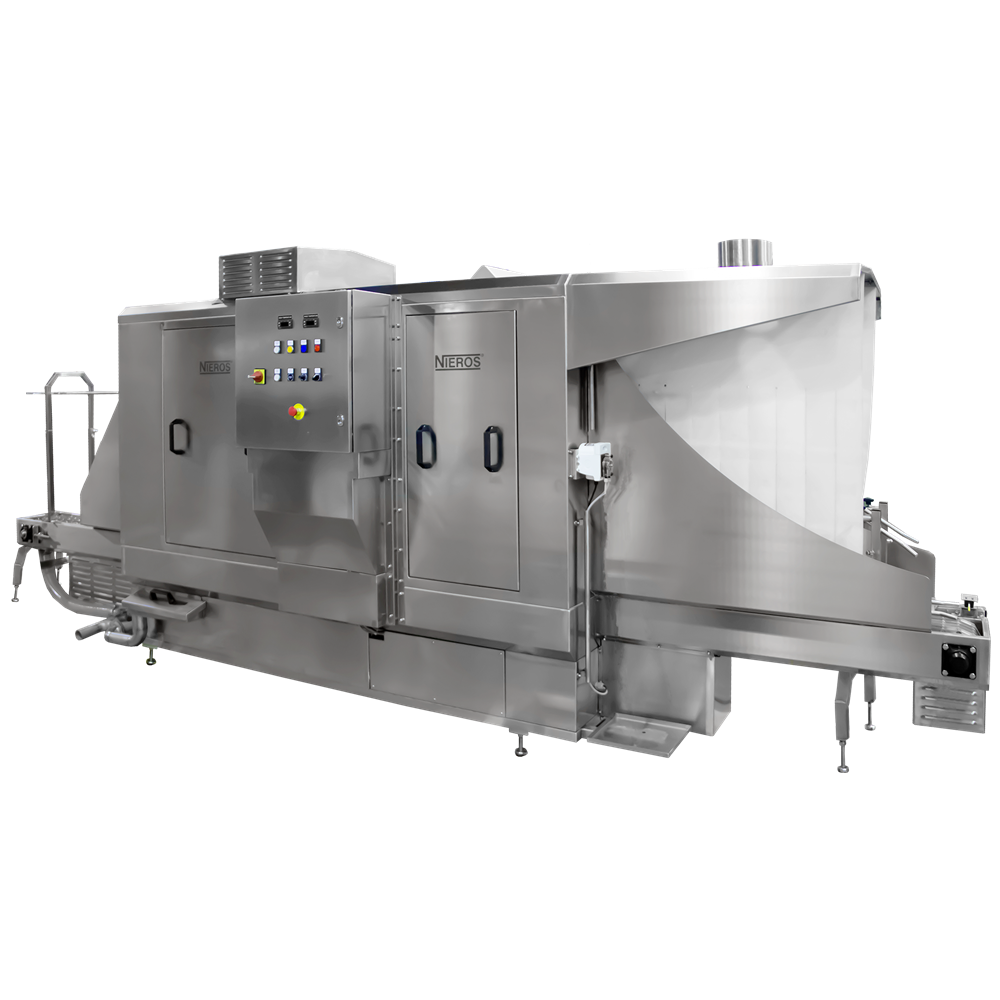
Our tunnel dryer is designed to retain heat throughout the cycle while maintaining stable internal operating conditions and safe external surface temperatures. Proper thermal insulation is one of the most crucial engineering features. Escaped heat increases energy consumption, places additional demands on heating systems, and decreases process performance.
Our insulation prioritizes heat retention over heat generation. Instead of relying on a single insulating layer, our design combines insulated walls and access doors, thermally optimized structural components that minimize heat transfer, and tightly sealed joints. All of these features reduce opportunities for heat to escape during tunnel drying. Combined with an integrated thermal barrier, they form one of the most valuable engineering features of our solutions.
Establishing Multi-Zone Temperature Control for Tunnel Drying
Drying equipment must have multi-zone temperature control to achieve consistent and efficient performance. A single temperature configuration throughout the entire process can limit efficiency. Multi-zone temperature control addresses this challenge by dividing the process into separate zones, with each phase maintaining specific temperature and airflow conditions. Our comprehensive solutions create a controlled environment, maintain stable conditions, and precisely manage heat application.
Multi-zone temperature control allows each section of the tunnel to perform a specific function, improving overall drying consistency. Fans and distribution systems move warm air through the chamber, while heating elements provide thermal energy. The interaction between these components, combined with airflow management, allows our tunnel dryer to maintain temperature stability and prevent unwanted temperature changes between zones.

Understanding Static Pressure Inside a Dryer
A tunnel dryer relies on controlled airflow to achieve consistent performance. One of the most important parameters is static pressure. Inside the machine, this pressure represents the energy available to push air through heating sections, item zones, ducts, distribution channels, and exhaust systems. Understanding and monitoring it allows operators to identify performance issues before they affect production.
Static pressure is generated by circulation fans accelerating air into the duct system. Resistance from filters, heaters, bends, ducts, and product loads converts part of the fan's energy into static pressure. The pressure rarely remains the same throughout the entire tunnel and should not be evaluated in isolation. It works together with humidity, airflow velocity, temperature, and conveyor speed to create stable conditions for consistent operation and reliable performance.