








An industrial boot wash station is an investment in hygiene, operational integrity, and long-term reliability. In food processing facilities, fisheries, and agricultural settings, boots are among the primary carriers of harmful microorganisms because they move between contaminated zones and sterile production areas. Therefore, it is paramount to ensure the effectiveness of an automated footwear cleaning solution. A comprehensive, structured evaluation measures performance accurately and provides a complete understanding of shoe cleaning station efficiency.
Brushes are a critical component of an industrial shoe sole cleaner. Choosing the right solution for your facility improves cleaning efficiency, extends equipment life, protects personnel footwear, and strengthens hygiene standards.

Measuring the Effectiveness of Shoe Cleaning Station
An industrial boot wash station must effectively control contamination while maintaining the highest hygiene standards. Its effectiveness is determined by how consistently it removes contaminants to the required standard while operating efficiently, safely, and reliably over time. Performance evaluation begins by defining clear objectives, including throughput requirements, hygiene standards, resource consumption limits, and operational uptime targets. Once these benchmarks have been established, they provide measurable performance indicators.
Facilities equipped with an industrial shoe sole cleaner can evaluate hygiene performance through microbiological and contamination sampling, swab testing, visual inspections, contamination distribution analysis, and residual contamination assessments. They can also measure throughput, operational efficiency, processing speed, cycle time, personnel flow, and congestion levels. Additional performance indicators include automation responsiveness, water consumption, chemical dosing accuracy, wastewater quality, system uptime, fault frequency, response time, and long-term component wear. The overall evaluation also considers acceptable downtime, failure rates, and maintenance response times to ensure the equipment continues to meet operational requirements.
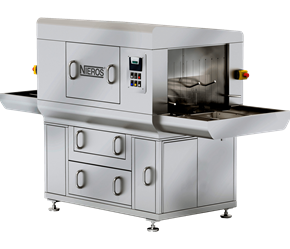
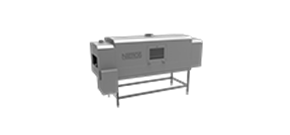
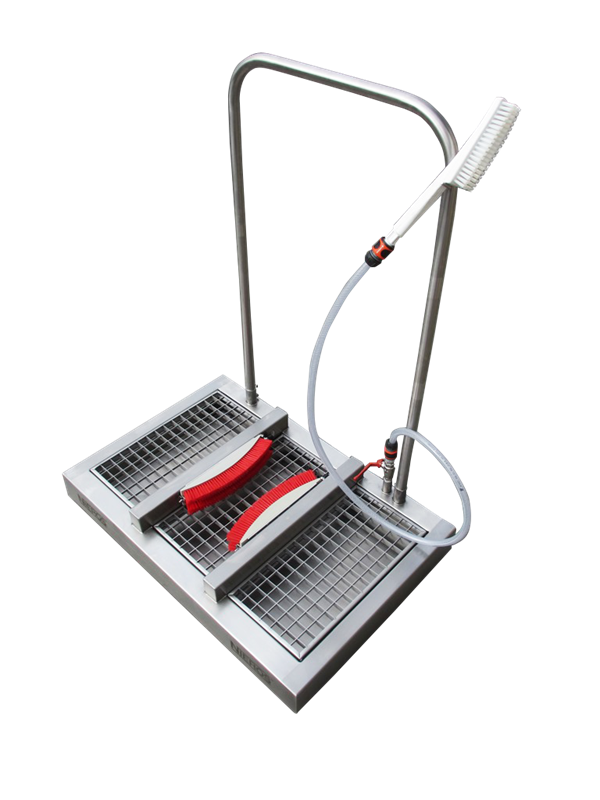
Industrial Shoe Sole Cleaner M by NIEROS®
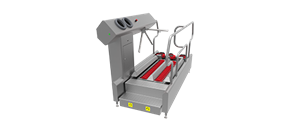
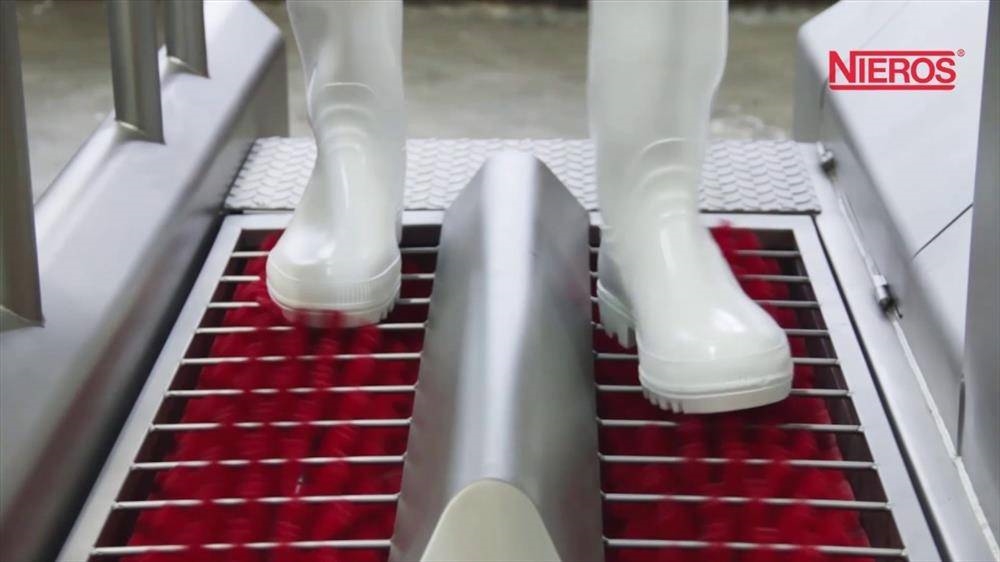
The industrial shoe sole cleaner M is a state-of-the-art unit equipped with bottom brushes for sanitizing footwear and a separate brush for manual footwear cleaning. To minimize contamination, it features a hygienic design with a smooth surface finish and adjustable height. We also offer a wide range of add-on units that can be integrated with the standard configuration. Intelligent control features support structured hygiene procedures and help maintain high levels of microbial control across industrial environments.
Our footwear cleaning solutions are available in multiple configurations and can disinfect the soles, the sides, or the entire boot, depending on operational requirements. By removing visible contamination before personnel enter controlled areas, an industrial boot wash station reduces microbial load and helps prevent contaminants from reaching sterile production zones.
Choosing Brush Materials for Shoe Cleaning Station
An industrial boot wash station delivers long-term performance through durable construction, chemical resistance, moisture resistance, effective cleaning performance, wear resistance, temperature stability, and hygienic design. While the engineering of the equipment is essential, the brush material largely determines how effectively the system performs over time. As manufacturers, we carefully select materials that remove contamination efficiently, withstand demanding operating conditions, reduce maintenance requirements, and protect personnel footwear. Poor-quality materials can reduce cleaning performance, increase cross-contamination risks, shorten service life, and lead to unnecessary replacement costs.
The brush material used in a shoe cleaning station should always be selected according to the environment in which the equipment will operate. Bristle stiffness is equally important, and the optimal stiffness depends primarily on the type of contamination rather than the footwear itself. Nylon remains one of the most widely used materials because it combines durability with flexibility, resists moisture, performs reliably across a wide temperature range, and provides excellent wear resistance.
Understanding Brush Configurations and Cleaning Performance
An industrial boot wash station performs most effectively when its brush configuration matches the expected contamination level. We offer multiple configurations, each engineered to meet different hygiene requirements, facility layouts, and production capacities. Brush configuration is important because contaminants accumulate differently across various parts of a work boot. A properly configured boot washing machine ensures that every surface receives thorough and consistent cleaning. The two primary brush orientations are horizontal and vertical. Horizontal brushes rotate beneath the footwear to clean the soles, while vertical brushes rotate alongside the boots to clean their sides.
We tailor brush configurations to a wide variety of operational requirements, ranging from compact units with one horizontal and two vertical brushes to walk-through systems featuring two horizontal brushes and four side brushes. Every additional brush increases the contact area between the equipment and the footwear, allowing more surfaces to be cleaned during each washing cycle.

Automated Industrial Shoe Sole Cleaner
A shoe cleaning station with automated operation delivers more consistent results, improves operational efficiency, and helps facilities comply with increasingly strict hygiene regulations. Although manual cleaning methods can be effective, their performance depends heavily on personnel behavior and consistency. To minimize these risks, more companies are investing in automated solutions. Automated equipment uses rotating brushes, controlled water flow, and timed disinfecting cycles to ensure every pair of boots receives the same level of sanitation. This standardized approach improves hygiene, reduces cross-contamination, lowers water and chemical consumption, increases throughput, and delivers more consistent cleaning performance.
By implementing an industrial boot wash station, facilities can strengthen workplace safety while realizing long-term operational savings. These savings result from fewer hygiene-related incidents, reduced labor requirements, lower water and chemical consumption, and improved operational efficiency. In high-traffic facilities, these benefits accumulate significantly throughout the equipment's service life. Prioritizing footwear hygiene creates a safer production environment while demonstrating a long-term commitment to operational excellence.