







A sanitizing machine interrupts contamination pathways. It protects personnel, supports regulatory compliance, enhances traceability, and prevents contamination from spreading to other equipment. Automation has transformed simple machines into intelligent systems capable of delivering greater productivity, continuous performance, and consistent hygiene. High-quality hygiene equipment supports efficient water and energy management, precise dosing, easy cleaning and maintenance, automation, traceability, scalability, and compliance.
Measuring industrial sanitizer performance through practical indicators allows facilities to evaluate solutions based on operational outcomes, monitor existing machines, and identify opportunities for improvement. Intelligent allocation of water resources forms the basis of reliable sanitizing technology. Water savings should always be achieved through improved efficiency rather than by reducing cleaning effectiveness.

The Role of Automation in Hygiene Equipment
A sanitizing machine helps facilities maintain high sanitation standards while improving productivity and reducing operational costs. One of the greatest advantages of automation is consistency. Stable sanitizing procedures ensure that every item processed by the unit receives the same level of disinfection, regardless of the operator. Manual processes rely on individual staff members following established procedures, which can lead to variations in timing, water temperature, and chemical application. Automation significantly improves disinfection standards by keeping critical process parameters within specified limits throughout every cycle. With continuous monitoring, the system's performance can also be adjusted whenever necessary.
Automation minimizes human error, helping deliver consistent cleaning results even in harsh, fast-paced, and high-pressure environments. An industrial sanitizer reduces the need for manual intervention, lowering risks and ensuring optimal process control. It also enables precise temperature management, optimizes water consumption, and supports continuous production.
The Most Important Performance Metrics for Industrial Sanitizer
Hygiene equipment performance metrics help maintain consistent hygiene standards and optimize daily operations. These metrics measure how well an apparatus performs under real operating conditions. The most crucial indicators include the system's ability to achieve effective disinfection and maintain an appropriate cycle time. It must reduce microorganism levels to meet the requirements of its intended application within the specified time. A complete cycle may include loading, washing, sanitizing, rinsing, drying, and preparation for the next load.
Throughput measures how much equipment a sanitizing machine can process within a given period. It is one of the clearest indicators of operational productivity. Temperature and chemical dosing accuracy and stability are also critical metrics. Maintaining precise operating temperatures throughout each cycle supports effective microorganism removal, while accurate dosing ensures that chemicals remain within the recommended concentration range. Water and energy consumption have also become increasingly important performance metrics in recent years. They influence overall cost efficiency while supporting facility sustainability goals.

Industrial Sanitizer CLT SA for Vacuum-Packed Products
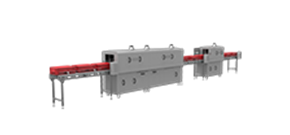
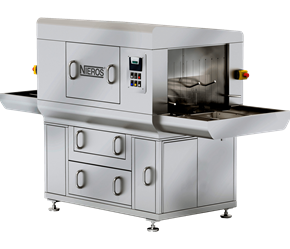
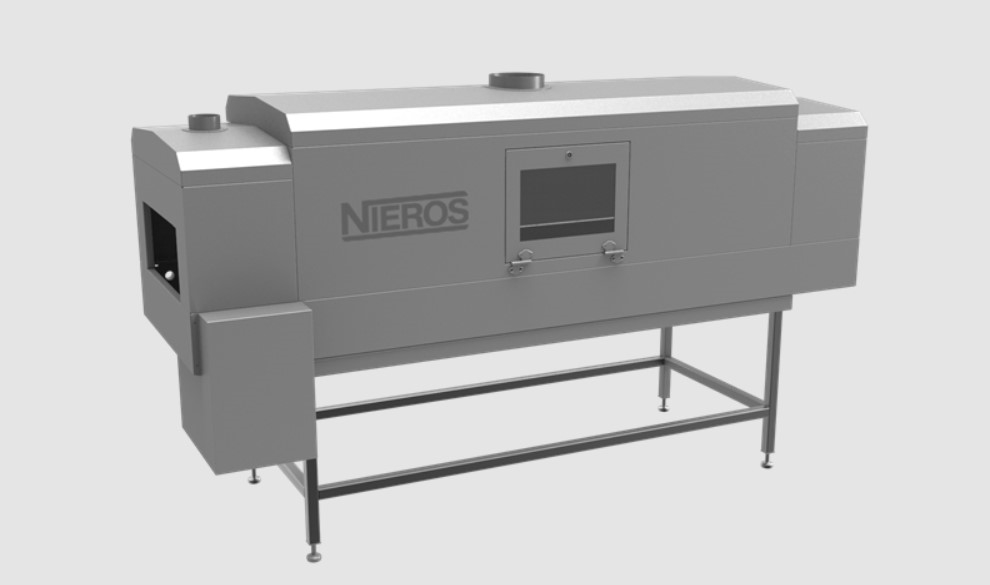
The sanitizing machine CLT SA, made of stainless steel, is suitable for vacuum-packed products. It can be installed as an integrated or separate unit. The height-adjustable CLT SA features a smooth surface finish, IP65 protection, and a mesh conveyor belt. It can optionally be equipped with a vapor extraction fan and mobile wheels or be fully customized to meet specific requirements. It also offers several sustainable features, including:
- Water recycling system
- Double filtering system
- Low water level protection
Our water recycling system reduces water consumption by collecting, cleaning, and reusing rinse water during other washing phases. With this solution, our hygiene equipment consumes less freshwater throughout the sanitizing process. A double filtering system keeps the water free of dirt particles, helping prolong the pump's lifespan. Low water level protection stops the apparatus when the water level is insufficient, preventing potential damage to the pump and heating elements.
Reducing Water Consumption with NIEROS® Hygiene Equipment
The industrial sanitizer we engineer at NIEROS® lowers water consumption without compromising hygiene. Water is one of the most valuable resources in industrial facilities, as every washing cycle uses it to remove contamination, rinse surfaces, and achieve the required level of cleanliness. Misuse of natural resources conflicts with the increasingly ambitious sustainability goals established by governments and organizations worldwide.
Hygiene must remain the priority and cannot be compromised. Therefore, we design a water recycling system that integrates into the sanitizing machine. The solution collects wastewater from previous phases, filters and cleans it to remove contaminants, and then reuses it during other phases, including pre-washing. This significantly reduces the amount of freshwater required, reserving fresh water for critical stages where it is most necessary.

The Key Indicators of Long-Term Machine Reliability
A sanitizing machine must operate reliably in harsh environments for many years. Long-term reliability depends on more than a single feature. It relies on manufacturing and material quality, control stability, component longevity, and maintenance-friendly design. The crucial indicators of long-term hygiene solutions include robust construction, durable components, efficient energy and water use, dependable cleaning performance, and strong resistance to demanding operating conditions.
An apparatus is only as effective as its design and performance. A solution built for continuous operation reduces cleaning time while maintaining high hygiene standards. Investing in quality engineering supports better results throughout every cleaning routine and helps facilities achieve reliable, efficient, and sustainable operations.